
AN UNCOY'D STORY · TAGORE
The Distances Tagore Kept
Bengal, 1919–1922
Three times, he had to decide how close to stand to something he mostly believed in.
A title. A crowd. A friend.
He said no to parts of all three, out loud, while staying close to the rest.
Start here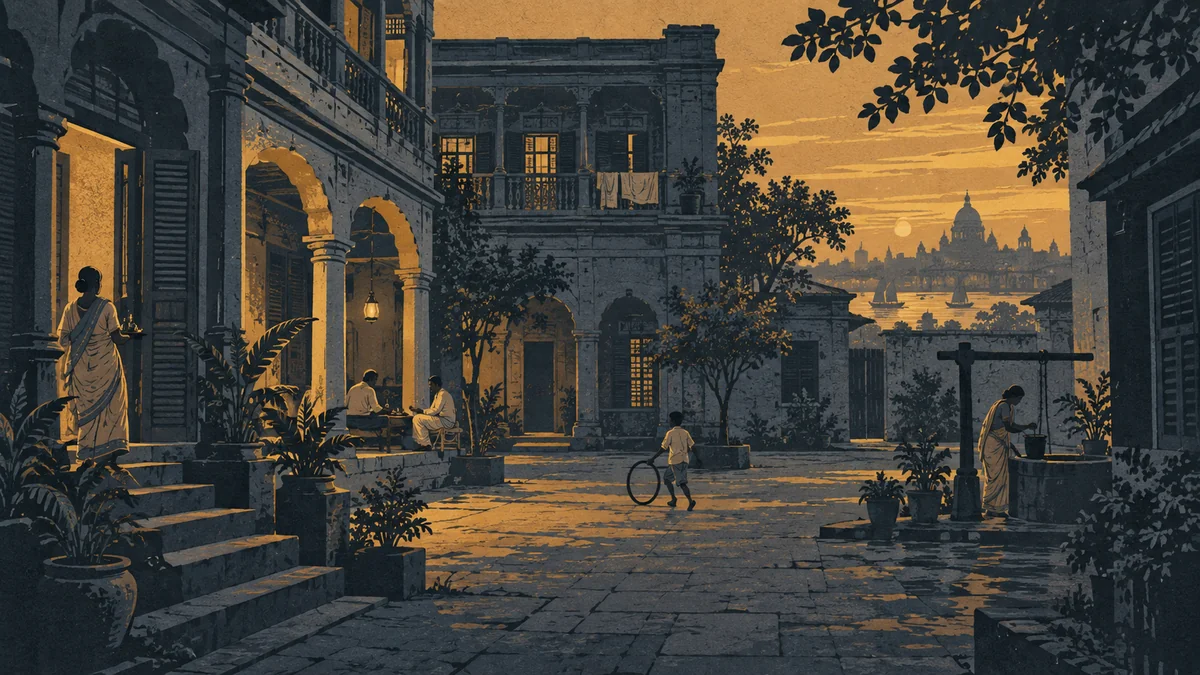
01 / THE HONOUR · Calcutta, 1919
A badge, handed back.
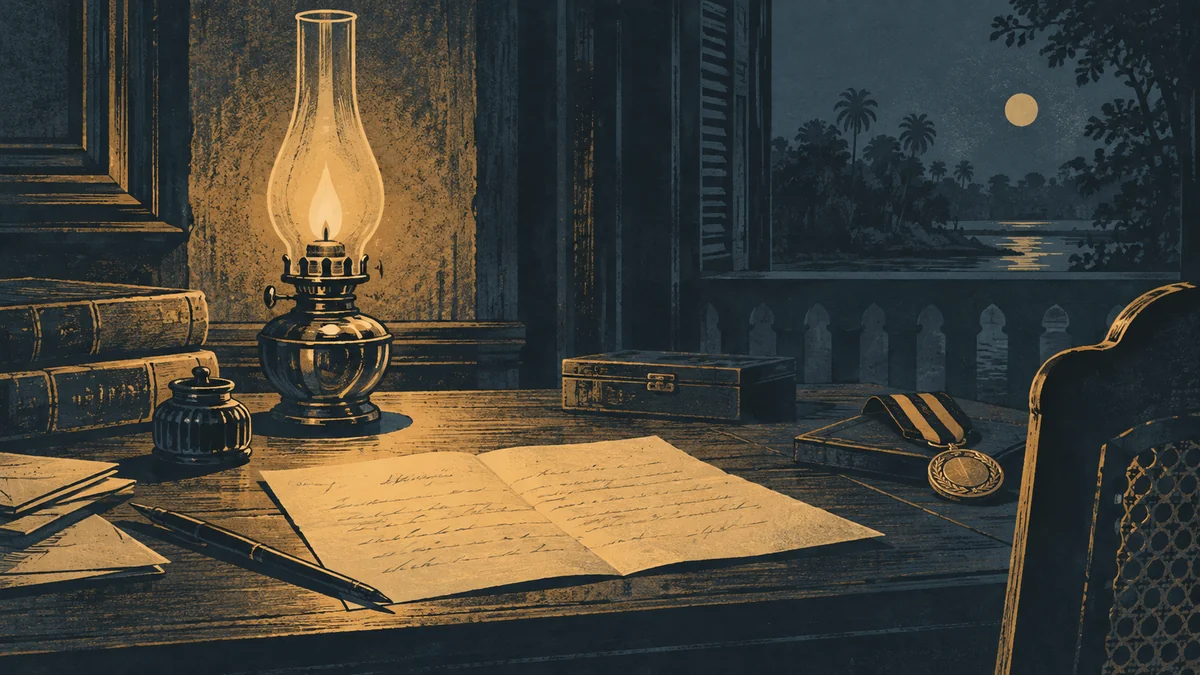

Rabindranath Tagore was knighted by the British Crown in 1915. On 13 April 1919, British troops opened fire on an unarmed crowd at Jallianwala Bagh in Amritsar, killing hundreds.
On 31 May 1919, Tagore wrote to the Viceroy, Lord Chelmsford, asking to be relieved of his title.
He wrote that the punishments inflicted in Punjab were, in his words, “without parallel in the history of civilised governments,” and that “the time has come when badges of honour make our shame glaring in the incongruous context of humiliation,” and that he wished “to stand, shorn of all special distinctions, by the side of my countrymen.”
He had accepted the title once, from the Viceroy’s predecessor, and said so with respect even as he gave it back.
What would you hand back, and could you say exactly why?
Your response · optional, private, not saved
02 / THE CROWD · Bengal, 1921
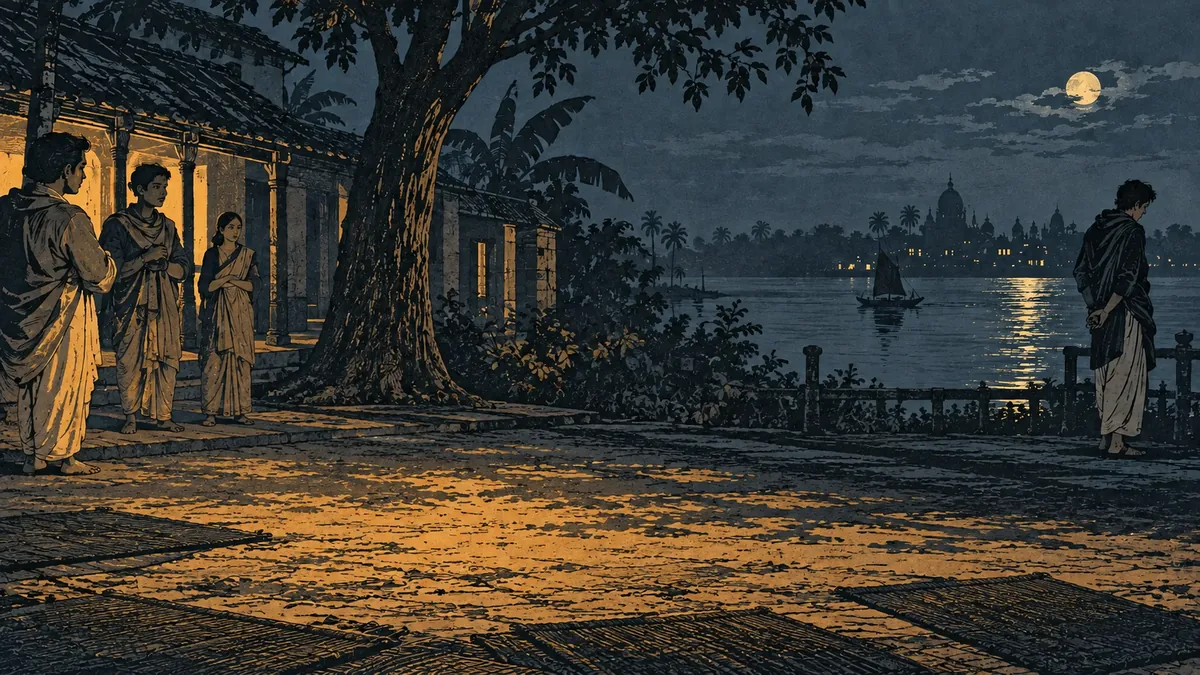
He wouldn’t light the fire.
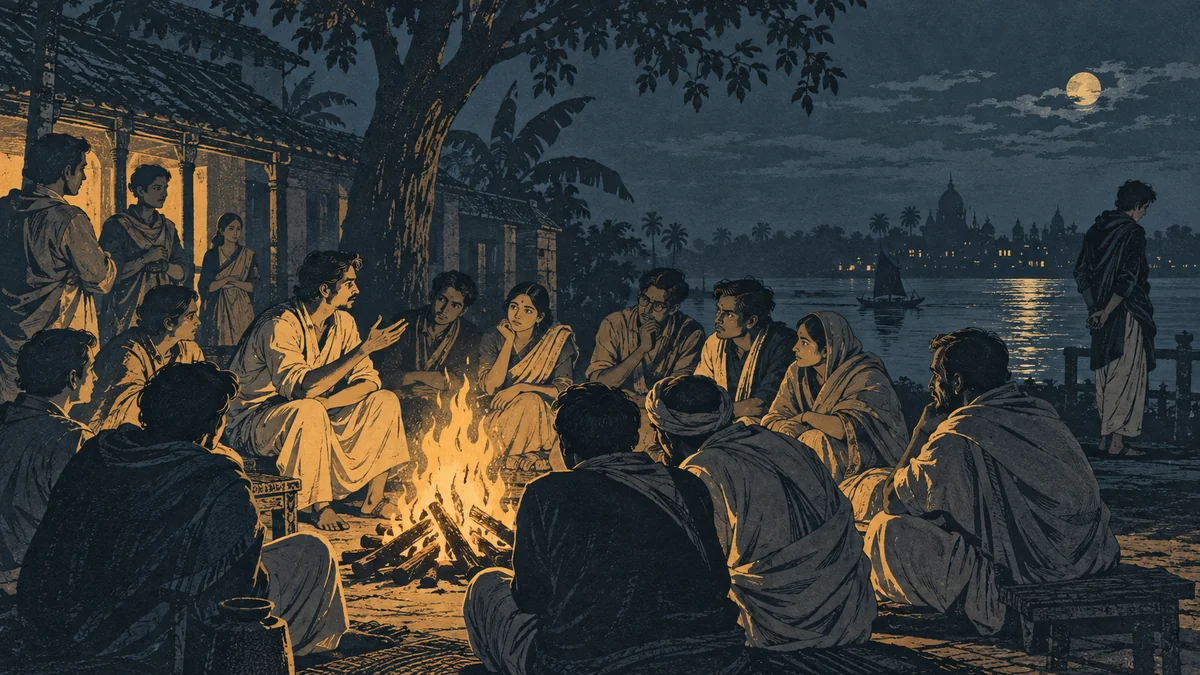
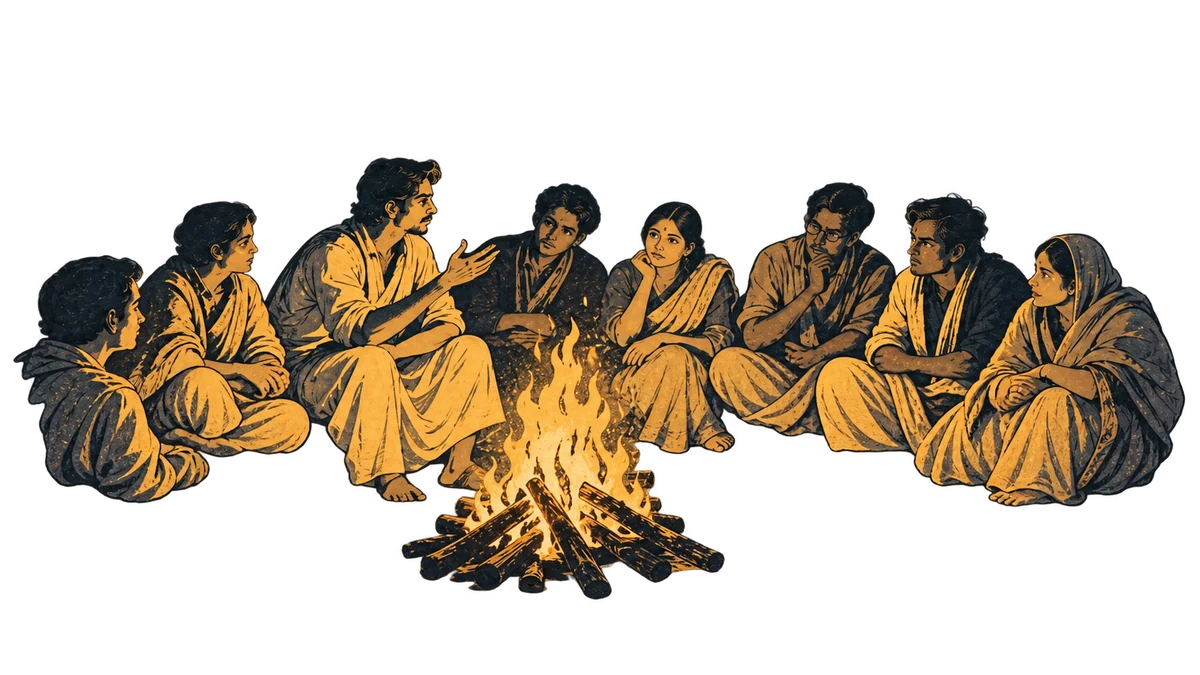
A weaver: “I want our work to matter here.”
A shopkeeper: “I’m giving up stock too. We have to do this together.”
A young volunteer: “At last, there’s something I can do.”
Gandhi’s non-cooperation movement asks Indians to boycott foreign cloth. In many towns, people gather to burn what they own.
Tagore supports the independence movement. He does not support the fire.
He argues that non-cooperation, practiced this way, asks people to stop thinking rather than start — that burning usable cloth in a country where people are poorly clothed is not sacrifice, it’s waste. Gandhi, in response, calls him “The Great Sentinel,” and defends non-cooperation as India recovering the power to say no after generations of being told to comply.
Tagore is not attacking the movement from outside it. He is inside it, disagreeing with one part of it, in public, while it is happening.
Could you stand outside a fire your own side lit?
Your response · optional, private, not saved
03 / THE FRIEND · Santiniketan, early 1920s
An argument that never became a rupture.
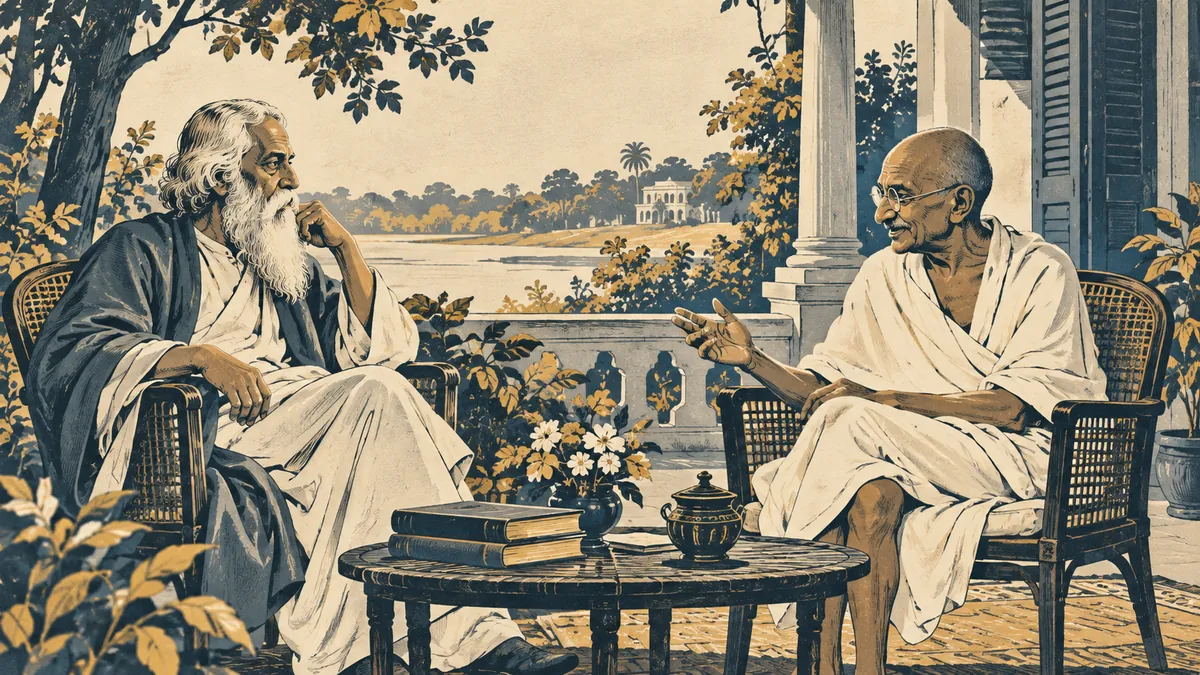
Gandhi and Tagore hold each other in real regard. Gandhi is said to have called Tagore “Gurudev”; the title “Mahatma” is often credited to Tagore, though some historians dispute the attribution.
They disagree anyway — about non-cooperation, the boycott of schools, the charkha — in essays and letters that both men knew the public would read. Neither one goes quiet to keep the peace. Neither one lets the disagreement end the friendship.
Would you argue in public with someone you admire, and stay close to them anyway?
Your response · optional, private, not saved
WHAT HE DID
He gave one thing back. He kept two others.
What he gave back
- A knighthood, once he judged it no longer stood for what it was meant to.
What he kept
- His support for Indian independence, even while opposing one of its methods.
- His friendship with Gandhi, even while opposing him in print.
He wasn’t anti-British on principle, and he wasn’t uncritical of his own side either. In each moment, he drew a line and could explain exactly where it was.
Where do your loyalties have edges, and can you point to them?
WHERE THIS COMES FROM
Where this comes from.
The 13 April 1919 line is his letter’s own account. He calls the events “local disturbances” in the Punjab; the massacre at Jallianwala Bagh is the reason for the letter. The quoted lines above are from the letter as published in The Statesman (3 June 1919) and the Modern Review (July 1919).
Tagore’s objection to non-cooperation and the boycott of foreign cloth is drawn from his essays and letters of 1920–21, including his correspondence with C.F. Andrews and his exchanges with Gandhi published in Young India. Gandhi’s “Great Sentinel” reply appeared in Young India, 13 October 1921.
The claim that Tagore coined “Mahatma” for Gandhi is widely repeated but disputed by some historians.
- Tagore’s full 1919 letter, Overman Foundation archive ↗
- Tagore’s letter, Columbia University DART archive ↗
- Gandhi’s “Great Sentinel” reply, in context — Mainstream Weekly ↗