
AN UNCOY'D STORY · SOCRATES
Where Socrates Stopped
Athens, 406–399 BC
Three times, someone wanted an answer from him.
A crowd. An order. A friend.
Each of them had reasons. Read what he did, and decide for yourself what you’d have done.
Start here
01 / THE CROWD · Athens, 406 BC
Grief wants someone to answer for it.
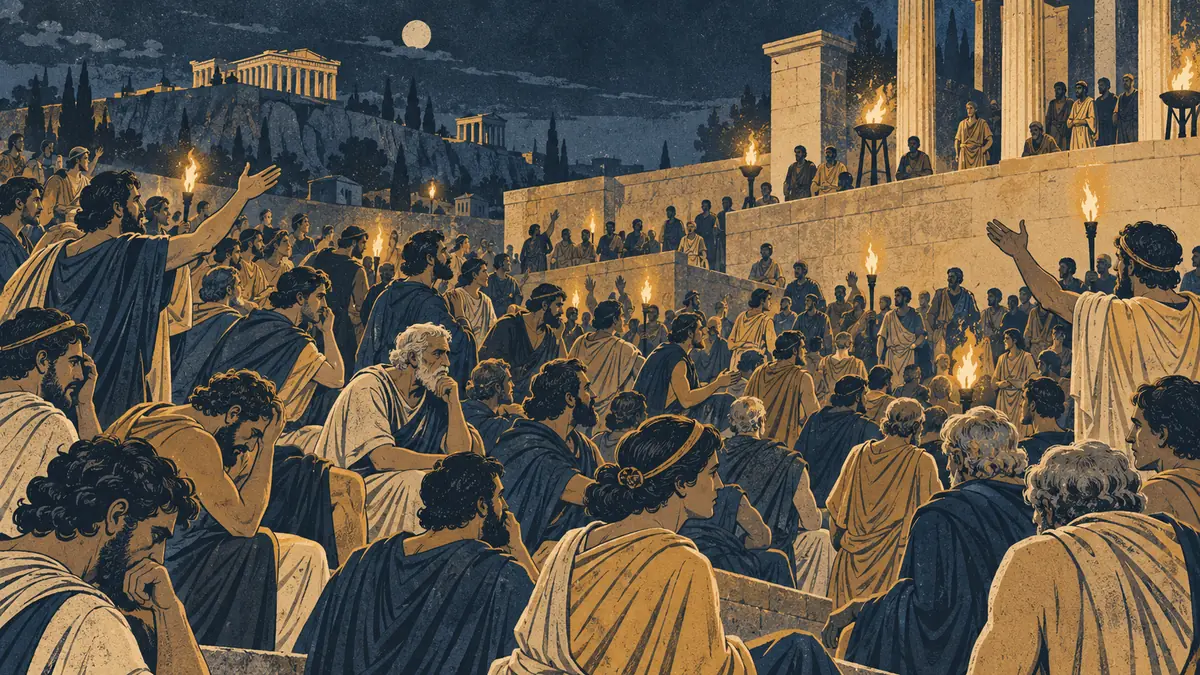
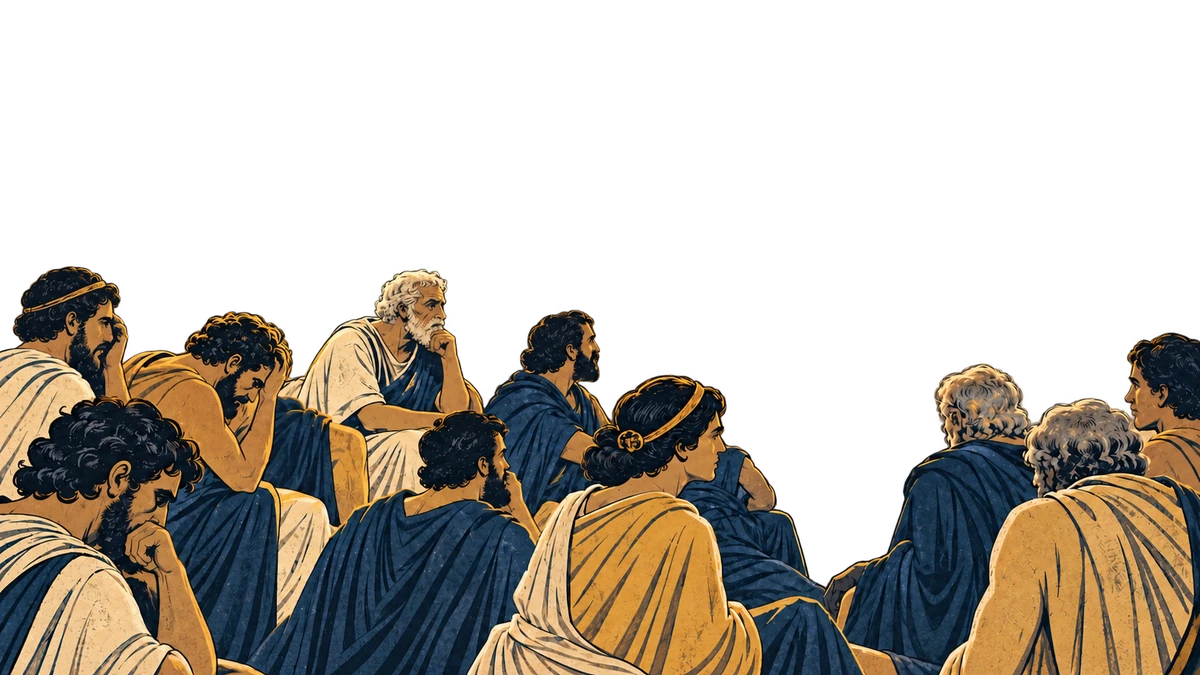
Athens wins a sea battle, but a storm leaves many of its own sailors in the water. Families are grieving.
After the battle of Arginusae, the assembly proposed trying the generals together. In Plato’s account, Socrates opposed a procedure he regarded as unlawful.
Socrates is serving on the committee that has to put the question to the vote. He objects.
Not because the crowd is stupid. It is grieving, and it wants someone to answer for the loss. He objects because he regarded the procedure as unlawful. (The ancient accounts differ on whether he stood alone.)
The pressure remained. His refusal changed his participation; it did not make the crowd disappear.
The vote goes ahead anyway.
What would you do with a crowd’s grief?Just for you. Nothing is recorded.
02 / THE ORDER · Athens, 404–403 BC
He didn’t fight it. He just wouldn’t carry it out.
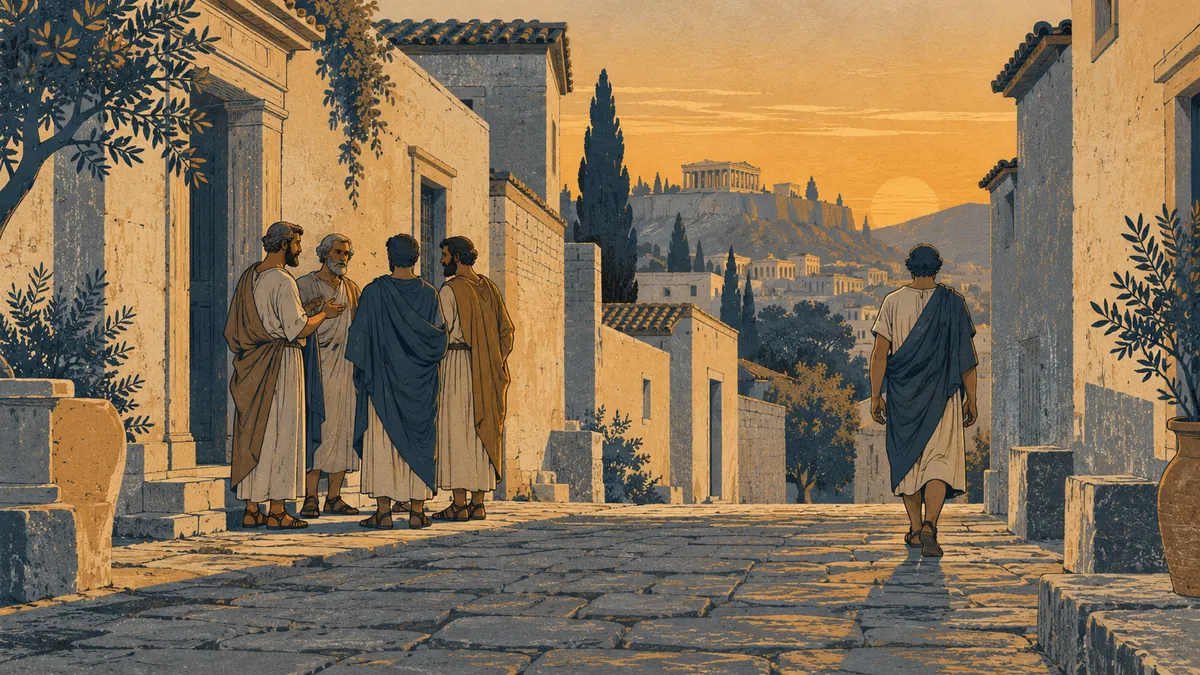


The war is lost, and Athens is now ruled by the Thirty, a regime that is killing its opponents.
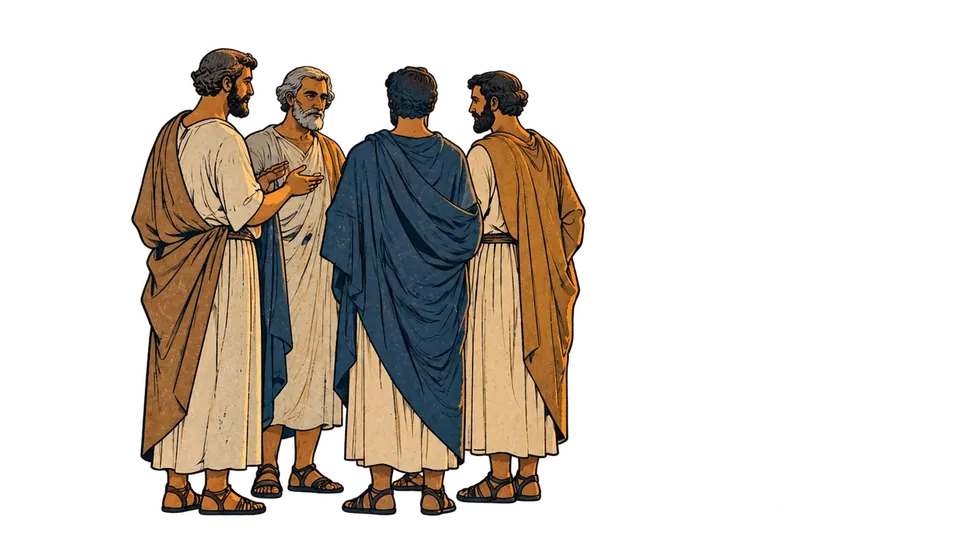
Socrates and four others were ordered to fetch Leon of Salamis for execution. The order would make them participants in the regime’s violence.
Four went. Socrates went home.
In Plato’s account, he judged the order unjust and did not carry it out.
He doesn’t lead a revolt. He doesn’t take on the regime. He just refuses to be the hands. He later said he might well have paid for it with his life if the regime hadn’t fallen soon after.
Leon was still taken. His refusal did not save Leon. It kept Socrates from taking part in the arrest.
Some Athenians asked, afterwards, why he stayed in the city at all while the Thirty ruled. It’s a fair question.
What’s the smallest thing you’d refuse to carry out?03 / THE FRIEND · Athens, 399 BC
A way out, and a friend who means it.
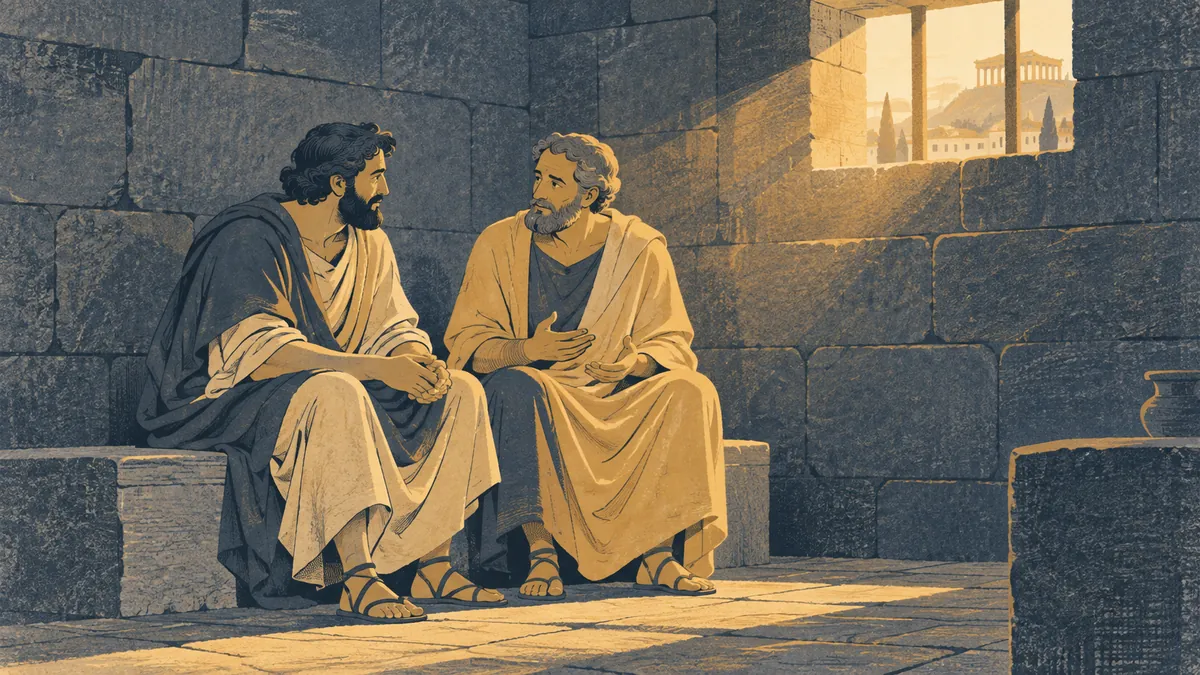
A jury convicts Socrates of impiety and of corrupting the young. The sentence is death.
His friend Crito has a plan to get him out of prison. He begs him to take it.
He listened. He examined the reasons. He chose to stay.
Plato presents him asking whether escape would be just. He argues that doing wrong in return, and breaking his obligations to Athens, would be wrong. You can challenge that argument.
His argument includes refusing to repay wrong with wrong and the obligations voiced by the personified Laws of Athens. These arguments are contestable.
A few weeks later he drinks the hemlock.
Would you have stayed?WHAT HE DID
He said no to some things. He said yes to others.

What he refused
- To take part in a procedure he regarded as unlawful.
- To help arrest Leon of Salamis.
What he accepted
- His obligations to Athens, as Plato presents his argument.
- The sentence, even when a friend offered a way out.
He could have been wrong. People who knew him thought so, and people who have read him since have argued it too. What stays worth looking at is that he wasn’t going along by default. In each case he had a reason he could say out loud.
Owning your judgment includes being willing to revise it. Staying firm is not, by itself, evidence that a decision is right.
Where do you stop, and can you say why?WHERE THIS COMES FROM
Where this comes from.
Socrates wrote nothing down. Almost everything we know about him comes from other people, and they don’t always agree. Plato’s Socrates and Xenophon’s Socrates are noticeably different men.
This page follows Plato’s presentation and compresses events from 406, 404–403, and 399 BCE. It does not establish Socrates’ private thoughts. Plato’s dialogues are philosophical works, not a verbatim transcript.
The events on this page come from ancient accounts, mainly Plato (the Apology and the Crito) and Xenophon (the Hellenica). Where the sources disagree, we’ve said so. Dialogue and the inner detail of each scene are our reconstruction, not quotations.
The voices in the crowd are invented.